


StormFighter [UK]
Last reviewed: 29th July 2026
Snapshot
Despite the cancellation of Project Mosquito in June 2022, the UK MoD and Royal Air Force (RAF) remained interested in acquiring a Collaborative Combat Aircraft (CCA). In October 2022, the MoD announced a successor to Mosquito, the Low-Cost Uncrewed Air Systems (LANCA Follow-On) project, which later became part of Tranche 2 of the RAF’s Autonomous Collaborative Platforms (ACP) strategy and was eventually renamed StormFighter.
In June 2026, the UK published the Defence Investment Plan (DIP), which allocated £300 million in investment between FY2026 and FY2030 for the “new, national” programme. Defence Insight estimates that the UK’s StormFighter requirement is for just under 500 drones, which will cost it an estimated US$3.185 billion, with a contract awarded forecast before the end of the decade.
Summary
- Programme value:
- $3.2 billion (Modelled)
- Units required:
- 490 (Estimated)
- Award year:
- 2028
- Status:
- Bid
- Type:
- Procurement - new
- Systems:
-
MQ-28A Ghost Bat - In-progress
Brontanax - In-progress
X-61A Gremlin - Potential
FQ-44A Fury - Potential
CA-1 Europa - Potential
XQ-58 Valkyrie - Potential
Gambit (Series) / FQ-42A Dark Merlin - Potential
- Unit cost:
- $5.2 million (Modelled)
- PGO:
- 85% ?
Summary
- Programme value:
- $3.2 billion (Modelled)
- Units required:
- 490 (Estimated)
- Award year:
- 2028
- Status:
- Bid
- Type:
- Procurement - new
- Systems:
-
MQ-28A Ghost Bat - In-progress
Brontanax - In-progress
X-61A Gremlin - Potential
FQ-44A Fury - Potential
CA-1 Europa - Potential
XQ-58 Valkyrie - Potential
Gambit (Series) / FQ-42A Dark Merlin - Potential
- Unit cost:
- $5.2 million (Modelled)
- PGO:
- 85% ?
Bids and suppliers
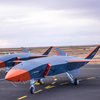
Boeing - MQ-28A Ghost Bat - UK
In-progress

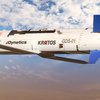
Dynetics & Kratos - X-61A Gremlin - USA
Potential

Anduril & Rheinmetall - Fury - Germany
Potential

BAE Systems - Brontanax - UK
In-progress
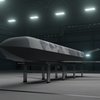
Leonardo UK - TBC - UK
Potential
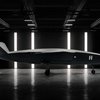
Helsing - CA-1 Europa - GERMANY
Potential
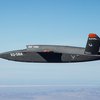
Kratos Unmanned Systems Division - XQ-58 Valkyrie - GERMANY
Potential
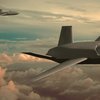
General Atomics Aeronautical Systems (GA-ASI) - Gambit (Series) - GERMANY
Potential
Additional Information
Background
Project Mosquito and its cancellation
Beginning in 2019, the UK’s Defence Science and Technology Laboratory (DSTL), in collaboration with the Royal Air Force (RAF), began the development programme for a new low-cost UAS’ Loyal Wingman’ concept called the Lightweight Affordable Novel Combat Aircraft (LANCA). The project later became known as Project Mosquito.
However, on 24 June 2022, the MoD published a statement announcing that Project Mosquito would “not proceed beyond the design phase”. According to the statement, the decision, reached by mutual agreement with industry partners, followed a detailed review of the technical demonstrator and the LANCA programme.
Post-Mosquito requirements
Despite the cancelled programme, the RAF still desired to design, develop, and operate loyal wingmen or uncrewed adjunct aircraft. The MoD expressed this desire in its statement announcing the programme’s cancellation and in remarks by Wg Cdr Colin Welsh, head of military systems at the Rapid Capabilities Office (RCO), who spoke to Shephard in July 2022.
Due to this remaining desire, speaking ahead of the Farnborough International Airshow 2022 to Janes, the Chief of the Air Staff, Air Chief Marshal Sir Mike Wigston, said that a new effort would be launched in Q3 2022, which would see the RAF take LANCA in a different direction. As promised, on 31 October 2022, the MoD announced a successor, the Low-Cost Uncrewed Air Systems (LANCA Follow-On) project.
Autonomous Collaboration Platform (ACP) strategy
Further developments of Mosquito’s successor came in March 2024, when the RAF released its Autonomous Collaboration Platform (ACP) Strategy, which set out how UAVs will be introduced into frontline service over the next decade.
The ACP strategy implemented a tiered system for its drone classification, with post-Mosquito efforts falling into the Tier 2 (or Tranche 2) category, with the Air Chief Marshal Sir Richard Knighton describing these systems as “attritable”, providing “key operational capabilities, which, if lost, won’t change the way [the RAF] fight.”
Notably, the ACP strategy also provided a loose timeline for the effort, stating that Tier 2 attritable ACPs would form a “critical component of the RAF’s Combat Air Force mix” by 2030. The following year, in June 2025, the MoD published a Prior Information Notice (PIN) outlining a two-year (running from April 2027 to 2029) contract opportunity with up to £20 million for Tranche 2 of the ACP effort, seeking a loyal-wingman style, most likely one use drone “designed to operate in collaboration with the fourth-, fifth- and future generations of combat aircraft and to operate from the UK aircraft carriers”. While it did not invite bids, it intended to engage with suppliers before formal tendering.
Defence Investment Plan (DIP)
A further, more concrete commitment to the capability came in June 2026, when the UK published its delayed Defence Investment Plan (DIP), which outlined plans to spend £298 billion ($404 billion) on defence over the next four years, with £5 billion allocated for autonomous systems. As part of this £5 billion, the DIP outlined £300 million in investment for a “new, national” Collaborative Combat Aircraft (CCA) programme, which appears to have formalised the efforts between the Mosquito’s cancellation and the 2026 DIP’s publication.
As reported by Defence Insight at the time, a concept demonstrator is set to fly by at least 2030, and the CCA is intended to fly alongside the RAF’s 4th- and 5th-generation fighters, the Eurofighter Typhoon, F-35A, and, when operational, the 6th-generation Tempest. Speaking at the Air Power Association Global Air and Space Chiefs’ Conference 2026 in London, Minister for Defence Readiness and Industry Luke Pollard confirmed that the effort was now called StormFighter.
Possible international cooperation
Despite references in the DIP to the CCA being sovereign, it highlighted that MoD would work with industry to leverage the technology and expertise being developed within the Global Combat Air Programme (GCAP) partner nations, suggesting a possible international partnership.
This follows the Trinity House Agreement signed by Germany and the UK in October 2024, which agreed on collaboration on developing advanced UAVs, such as jointly exploring and developing cross-system Combat Cloud capabilities, new Maritime Uncrewed Air System capabilities, standard offboard systems compatible with respective Future Combat Air Systems and support the implementation of NATO-agreed common standards to ensure connectivity and collaboration between fighter aircraft, reinforcing intergenerational and (un)crewed teaming.
(Potential) Bids and suppliers
Airbus and Kratos
On 16 July 2025, as reported by Shephard, Airbus and Kratos Defense announced a partnership to supply the XQ-58A Valkyrie, equipped with Airbus’ mission system, to the German Air Force by 2029. Due to the Trinity House Agreement, Defence Insight believes this UAV could be offered to meet the UK requirement.
Anduril and Rheinmetall
In August 2025, Breaking Defense contacted several manufacturers about this requirement. Anduril UK stated that it would bid for this effort. At the Paris Air Show 2025, the American Anduril team announced it had partnered with Rheinmetall to develop and manufacture European variants of its Barracuda and Fury systems for European armed forces. As part of the partnership announced between Anduril and Rheinmetall in Paris in 2025, Rheinmetall’s digital sovereign Battlesuite system would be integrated into the European variant of Anduril’s Fury.
BAE Systems
In July 2022, BAE Systems revealed two UAV concepts, then called Concept 1 and Concept 2, and later referred to as the Autonomous Collaborative Platform (ACP). Four years later, at the Farnborough International Airshow (FIA) 2026, BAE Systems unveiled Brontanax, the successor to the Concept 2 aircraft, becoming the UK’s first fully sovereign CCA, the company’s answer to the StormFighter CCA requirement, with its name, which in Ancient Greek means “thunder,” exemplifying the link.
As reported by Defence Insight from FIA 2026, BAE believes its “key differentiator” was the drone’s sovereignty, with FalconWorks managing director Dave Holmes telling journalists following the unveiling that BAE had reached out to “nearly 100 UK-based companies” and had drawn in new companies from near-neighbour industries to help secure its sovereign supply chain.
Boeing
In May 2023, Boeing told Shephard that discussions had occurred between it and the UK MOD over whether the MQ-28A Ghost Bat could satisfy the country’s CCA requirement. According to Krystle Carr, Boeing’s autonomous collaborative platforms director, these conversations primarily concerned the number of UAVs required and questions about domestic production.
At the Paris Air Show 2025, interim president and CEO of Boeing Defense, Space and Security (BDS), Steve Parker, once again highlighted the UK as a potential system customer, highlighting the Air Force’s and Royal Navy’s separate requirements for such a system. This assertion came despite the Royal Australian Air Force’s (RAAF) viewing the Ghost Bat as a testbed platform, as reported by Shephard, a view that the UK and Boeing itself do not appear to share.
The drone was displayed in the UK, fitted with MBDA’s Meteor air-to-air missile at the Farnborough International Airshow (FIA) 2026, clearly pitched towards StormFighter. Regarding export customers, speaking at the show, Glen Ferguson, MQ-28 global program director, said that the company would rather have many smaller factories localised in countries to meet a country's needs than have one centralised mega factory, because “most countries will want their own sovereign capability”.
Dynetics and Kratos
In its March 2024 Autonomous Collaboration Platform Strategy, the RAF gave the Gremlin as an example of an Attritable Tier 2 drone. Since the post-Mosquito project fell into Tier 2, it is perhaps noteworthy that the RAF highlighted the Gremlin as its example for this drone tier. Based on this, Shephard believes the UAV could be involved in the programme.
General Atomics (GA-ASI)
On 17 July 2025, GA-ASI announced that it would partner with General Atomics Aerotec Systems GmbH to develop a European variant of the YF-42A (Gambit) CCA, which would be assembled in Europe with European mission systems. Due to the Trinity House Agreement, Defence Insight believes this UAV could be offered to meet the UK requirement.
Helsing
On 25 September 2025, Helsing unveiled the CA-1 Europa. Speaking to Shephard, Ned Baker, UK managing director at Helsing, linked the drone to the UK’s procurement, stating that the aircraft “will offer the RAF unprecedented combat air capability – an autonomous collaborative platform that can undertake several different missions to protect the UK without putting British pilots in harm’s way”. In February 2026, Helsing and HENSOLDT announced they would collaborate on the drone, with HENSOLDT’s software suite and several payloads to be used on the UAV.
Leonardo
In August 2025, Breaking Defense contacted several manufacturers about this contract. In response, Leonardo stated that the project related to various areas of expertise in which Leonardo had a “strong position”. The firm continued by confirming it was closely evaluating the UK’s ACP requirements.
Rolls-Royce
Notably, the 2026 DIP outlined that the UK’s CCAs will “exploit a sovereign, world-leading propulsion system,” most likely Rolls-Royce.
Spirit AeroSystems
Belfast-based Spirit AeroSystems was the prime contractor for Project Mosquito before its cancellation, with the company ready to build the Mosquito demonstrator. The company told Breaking Defense in August 2025 that it could not confirm any interest in this procurement.
Methodology
PGO
The programme’s prominent mention in the 2026 DIP suggests it is likely to advance; therefore, Defence Insight has assigned it a PGO of 85%.
Units required
According to Shephard’s Defence Insight, the UK will have 107 Typhoons (this does not include Typhoon Tranche 1 since it is expected to leave service by 2025) and 138 F-35B fighter jets by around 2030. Even following the Tempest’s proposed replacement of the Typhoon, the RAF will presumably operate around 245 fighter jets.
The DIP stated that the CCA will operate alongside these platforms. Under the USAF’s CCA effort, USAF Secretary Frank Kendall has told planners to assume that between two and five CCAs could be acquired per crewed aircraft. Based on the lowest estimates, the UK could therefore acquire 490 StormFighter CCAs.
Unit cost
In its ACP strategy, the RAF stated that a Tier 2 platform must be attritable; if lost during a mission, it would not change how the force fights. Based on this assertion, the unit cost will likely be on the lower end for a CCA.
An example of a cost-effective drone of this type is Kratos’ XQ-58A Valkyrie UAV. Across two statements from January 2020 and May 2023, Kratos stated that it would have a gross cost of $6.5 million at a low production rate, a cost of $4 million at a high production rate of 50 units a year and could be as low as $2 million if 100 units could be produced per year. Based on these figures and the required quantity, Defence Insight estimates that a Tier 2 drone could cost $6.5 million, with a flyaway unit cost of $5.2 million.
Programme value
The £300 million investment outlined in the DIP is just the start, with the document outlining that, in the 2030s, there will be continued investment in the RAF’s fleet, including “continued investment in our CCA programme to deliver autonomous capability for every combat air squadron”. Indeed, speaking to Breaking Defense, head of Leonardo’s British division Clive Higgins, said the same, highlighting the funding in the DIP is only “enough to probably kick off a program and do some initial demonstrator work. I don’t think you’re going to get [a] complete [fleet].” However, based on the unit cost and required units, Defence Insight estimates that the entire fleet could cost $3.185 billion to procure.
Programme timeline
The RAF’s March 2024 ACP strategy shed some light on a potential timeline. It stated that an objective was for Tier 2 attritable ACPs to form a “critical component of the RAF’s Combat Air Force mix” by 2030. The 2026 DIP stated that a concept demonstrator is set to fly by at least 2030, suggesting a delay in acquiring the capability. Based on this, Defence Insight forecasts a 2028 contract award.
Related Programmes
Project Mosquito [UK]
Uk • Air Force
Beginning in 2019, the UK’s Defence Science and Technology Laboratory (DSTL), in collaboration with the Royal Air Force (RAF), began a development programme for a new …
Autonomous Collaboration Platform (ACP) (Project Vanquish) [UK]
Uk • Navy
In October 2025, the Royal Navy (RN) issued a request for industry proposals for Project Vanquish, an initiative to develop and test a Tier 2 …
StormShroud: Autonomous Collaboration Platform (ACP) [UK]
Uk • Air Force
The Royal Air Force (RAF) redefined the role of UAVs in its March 2024 Autonomous Collaboration Platform (ACP) Strategy. The report stated that the objective was …
UAS: communication systems | Autonomous Collaboration Platform (ACP) (Project Vanquish) [UK]
Uk • Navy
This subsystem requirement is for the UAS: communication systems part of the Autonomous Collaboration Platform (ACP) (Project Vanquish) [UK]. View platform programme here
UAS: flight control systems | Autonomous Collaboration Platform (ACP) (Project Vanquish) [UK]
Uk • Navy
This subsystem requirement is for the UAS: flight control systems part of the Autonomous Collaboration Platform (ACP) (Project Vanquish) [UK]. View platform programme here
UAS: flight control systems | Collaborative Combat Aircraft (CCA) [UK]
Uk • Air Force
This subsystem requirement is for the UAS: flight control systems part of the Collaborative Combat Aircraft (CCA) [UK]. View platform programme here
UAS: communication systems | Collaborative Combat Aircraft (CCA) [UK]
Uk • Air Force
This subsystem requirement is for the UAS: communication systems part of the Collaborative Combat Aircraft (CCA) [UK]. View platform programme here
UAS: flight control systems | Project Mosquito [UK]
Uk • Air Force
This subsystem requirement is for the UAS: flight control systems part of the Project Mosquito [UK]. View platform programme here
UAS: communication systems | Project Mosquito [UK]
Uk • Air Force
This subsystem requirement is for the UAS: communication systems part of the Project Mosquito [UK]. View platform programme here


